
Start an SMM reseller business by testing one clearly described offer, with a spending limit and a record of every order. Before building a large storefront, find out whether customers understand the offer, whether the exact services meet its requirements and whether the price covers the work of supporting it.
The 30 days below are a suggested planning window, not a revenue forecast. The useful result is a decision supported by your own pilot records: continue, narrow the offer or stop. If you are new to the category, start with our explanation of SMM panels.
Days 1–5: write the offer before building the shop
Choose one type of buyer and ask what they need help with. A customer who wants someone to organize orders has a different problem from one who expects content strategy or sales leads. Do not sell the first as a substitute for the second.
Write a short offer containing these four decisions:
- Scope: the service, target format and quantity the buyer receives.
- Evidence: how you will report the order’s state and any confirmed adjustment.
- Timing: what is an estimate, and when the buyer can expect an update from you.
- Remedies: who handles cancellation, a disputed result or a payment problem.
Write down the service, target link, quantity and delivery options your customer is purchasing. The NotPanel Terms govern your use of NotPanel and do not replace the terms of your own customer relationship.
Days 6–10: qualify a short service list
Use the current catalog. Record each service ID, its description, limits, current price and your test date. Review average start time and order-based feedback to narrow the list, then place a small, permitted test where appropriate.
Keep observed start, final order state, confirmed refund and support work in separate columns. A service can begin promptly and still require follow-up later. One successful order is evidence about that test, not a reliability percentage. Review another order before increasing your commitment.
Days 11–15: price the work, including the inconvenient parts
The difference between retail price and catalog cost is only the beginning. Include payment fees, the time spent answering questions, customer acquisition and an allowance for remedies you may owe. Keep monthly overheads separate so you can see how many sales would be needed to cover them.
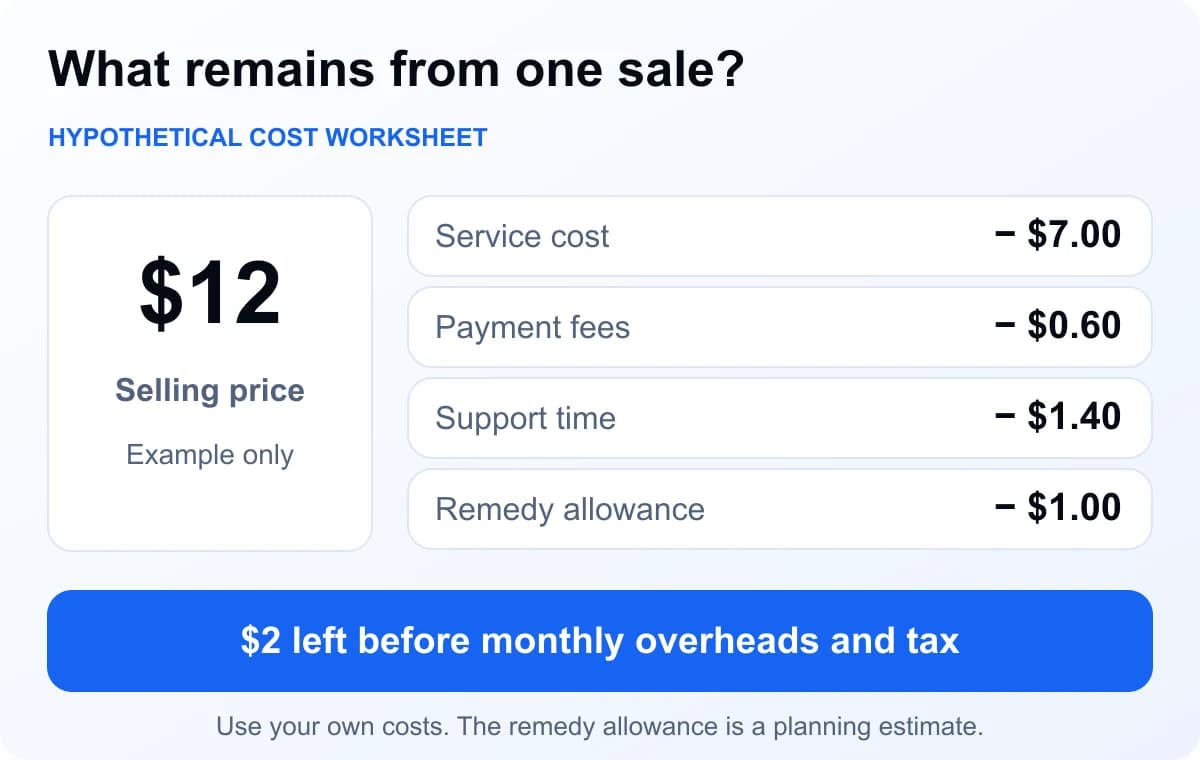
In this example, $12 − $7 − $0.60 − $1.40 − $1 leaves $2 per orderbefore monthly overheads and tax. The $1.40 support estimate could represent seven minutes at an assumed $12 hourly cost. If the same order takes 17 minutes of support, that extra $2 consumes the entire amount left.
With $60 of monthly overhead and the original $2 allowance left per sale, the simplified break-even estimate is 30 orders. That assumes the same costs and offer; it is not a sales target you can expect to reach. The Small Business Administration’s break-even guidance explains the distinction between fixed costs and costs that change with sales.
Days 16–22: rehearse the order and the exception
Give each customer purchase a reference and connect it to its NotPanel order ID. Record what the customer paid separately from what you paid for the service. Check the result in Orders and the money in Wallet history; dashboard pages require sign-in.
Walk through a mistaken order, an unknown submission result and a customer asking for a refund. Do this as an internal rehearsal; use a real support ticket when you have an actual question. If you automate, keep the same request ID when retrying the same purchase and follow the current API contract. Our agency workflow guide covers batch review.
Give customers a realistic next update time that you control. NotPanel’s support guide distinguishes routine answers, human review and resolution. Your customer still needs an answer from your business while a supplier investigation is open.
Days 23–30: review a small paid pilot
Reconcile every pilot order, then compare your assumptions with what happened. Count enquiries separately from purchases. Record the time spent on support, the cost of acquiring the buyer and any amount still owed. A deposit in a supplier Wallet is not proof of customer demand.
| What the pilot shows | Next decision |
|---|---|
| Customers understand the offer; records reconcile; costs leave room | Increase the pilot modestly and check the same measures again. |
| People buy, but support consumes the amount left | Improve the explanation, narrow the service list or revisit the price. |
| Orders or refunds cannot be explained from records | Pause new commitments while the missing records are resolved. |
| Customer links do not match the selected services | Clarify the required link format before accepting another order. |
Write the decision down with a date and the evidence behind it. A smaller offer you can explain and support is a useful pilot outcome, even if the original plan was a much larger catalog.
Questions before starting
How much money do I need to start an SMM reseller business?
There is no useful universal deposit amount. Budget for your chosen service tests, payment fees, customer support, fixed expenses and money available for customer remedies. Set a pilot spending limit before funding an account.
Is the difference between the selling price and service cost my profit?
No. Payment fees, support time, customer acquisition, refunds, overheads and applicable taxes can reduce that difference. Use measured pilot costs before deciding what you can afford to charge.
Do I need to automate before testing demand?
No. A small pilot can use a written offer and carefully tracked orders. Automate once you can describe the steps, exceptions and customer promises; automation will repeat mistakes as readily as correct instructions.