


An SMM panel fits a defined catalog order: choose a service, target and quantity, then manage that order. An agency or freelancer can take responsibility for a broader job, such as producing content, planning a campaign or managing an account. The useful cost comparison starts with the work you need completed.
Write that work in one sentence. “Produce eight posts and answer customer comments this month” needs people and an agreed scope. “Place this particular catalog order and track its delivery” needs a suitable service and someone to manage it. A low price for the second task does not supply the work in the first.
What belongs in each quote?
| Cost or responsibility | Panel order | Agency or freelancer |
|---|---|---|
| What you buy | The selected service and quantity, under its terms | The deliverables in the written scope |
| How it is priced | The displayed service rate and final order charge | A project fee, retainer, hourly fee or agreed package |
| Content and strategy | Separate work for your team | Included only if the quote says so |
| Your time | Selection, inputs, monitoring and follow-up | Briefing, approvals and reviewing the work |
| Other spending | Applicable funding costs and any tools you use | Check ad spend, production, tools and extra revisions |
| How to review the result | Order outcome, service terms and Wallet records | Agreed deliverables and campaign measures |
For a concrete example of scope, WebFX's public social media services page lists consultation, an audit, design work and reporting in its offering, with custom pricing affected by needs such as networks and creative assets. That illustrates why an agency quote needs to be read as a scope of work. It is not an industry price average or a claim about every agency. The page was checked on 9 September 2026.
A small order still uses your time
Consider this hypothetical planning example. A selected order costs $12. You allocate $1 of payment costs to it, and spend 45 minutes selecting the service, checking inputs and reviewing the result. At an assumed internal time value of $20 per hour, that work adds $15 to the planning budget.
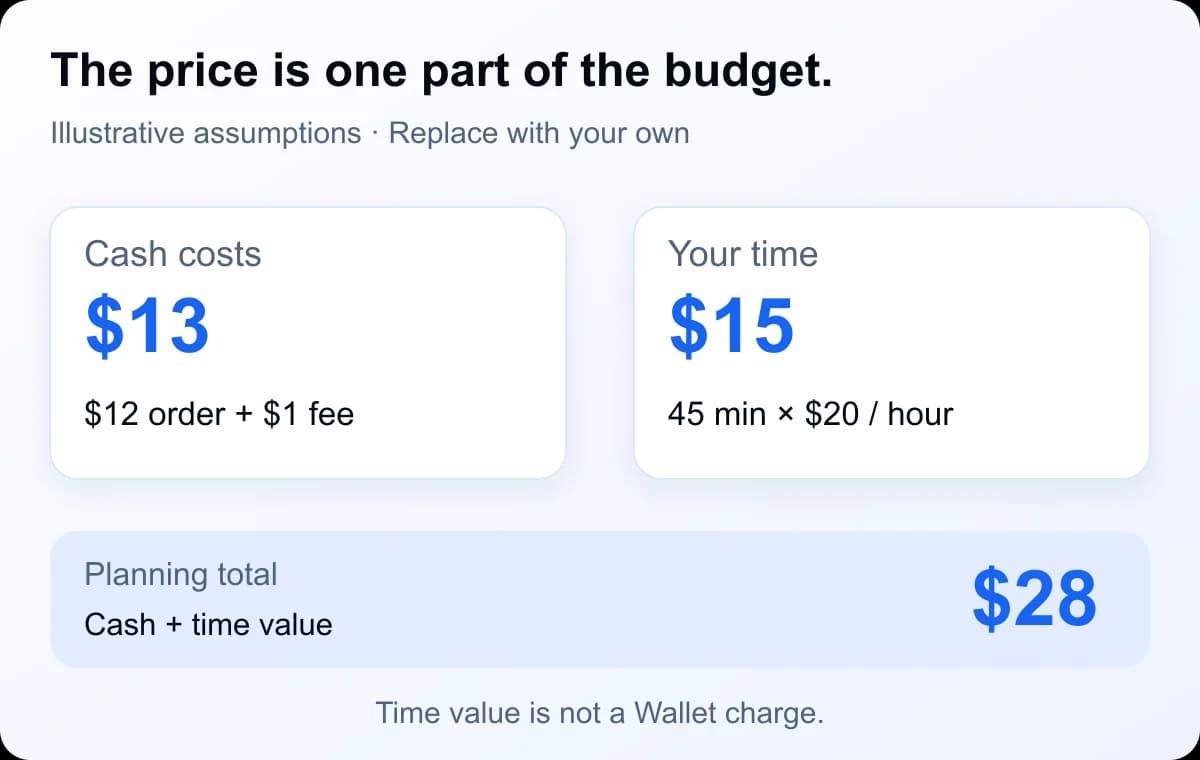
The calculation is $12 + $1 + (45 ÷ 60 × $20) = $28. Replace every input with your own costs. If a funding fee covers several orders, allocate it once across those orders. If an agency handles some of the work, replace that portion of your time estimate with its quoted fee and keep the time you still need for briefing and approval.
Where NotPanel helps you make the choice
NotPanel's public catalog lets you inspect the current rate, quantity limits and service details before choosing a row. There is no monthly account fee or setup fee; payment-method deposit minimums are shown at checkout. The pricing page explains the current catalog pricing, while the order form shows the charge for your selection.
Compare more than the price. Where history is available, Avg. start helps you choose when delivery is likely to begin; it does not estimate full completion. Buyer ratings add the experience of people who submitted feedback on eligible orders. Read the vote counts as well as the direction of the feedback.
Refill and drip-feed depend on the selected service. Read the refund policy before budgeting for an unresolved or partially delivered order. Our order-protection guide explains the conditions, the Wallet destination and the difference between a refund being due and money already credited. A possible future refund should not be treated as cash already available for another purchase.
Five questions to ask before hiring an agency
- What will be delivered? Specify the number and format of assets, platforms, publishing work and reporting.
- What is outside the fee? Ask about media spend, photography, tools, extra revisions and any third-party purchases.
- Who approves the work? Name the person responsible and agree how late feedback changes the schedule.
- What counts as a useful result? Match the measure to the job: completed creative, response coverage, qualified enquiries or sales, as appropriate.
- What happens when the scope changes? Agree the price and approval process for additional work before it is commissioned.
Apply the same clarity when combining tools. If a catalog purchase is part of a client campaign, make its purpose and budget explicit in the approved scope. Keep that order separate from content fees and advertising spend, with its own target, quantity and delivery schedule.
Choose the work you need help with
If the missing piece is content, strategy or ongoing management, compare people and their proposed deliverables. If your team already owns those responsibilities and needs a suitable catalog service, compare the exact service rows and order terms. If both are needed, give each a separate owner and budget, then agree the deliverables and reporting schedule before spending.
You can make the decision on one page: the job, the deliverable, its owner, the cash cost, the time still required and the way you will review the result. That makes a small self-service order and a larger managed project easier to assess on their actual value.
Common cost questions
Is an SMM panel cheaper than a social media agency?
Compare the deliverable first. A panel prices a selected catalog service by quantity; an agency quote can include content, strategy and ongoing management. Add payment costs, tools and the time your team still needs to spend before comparing the complete budgets.
Does a NotPanel order include content or campaign management?
A NotPanel order covers the selected catalog service. Content creation, campaign strategy, approvals and business reporting remain work for you or the people you hire. The current service description, price and order terms tell you what that individual order includes.
Is a Wallet deposit the same as an order expense?
A deposit adds funds to your NotPanel Wallet. An order charge spends part of that balance. When planning costs, distinguish the amount funded, any payment-method fee, actual order charges and the balance still available for future orders.